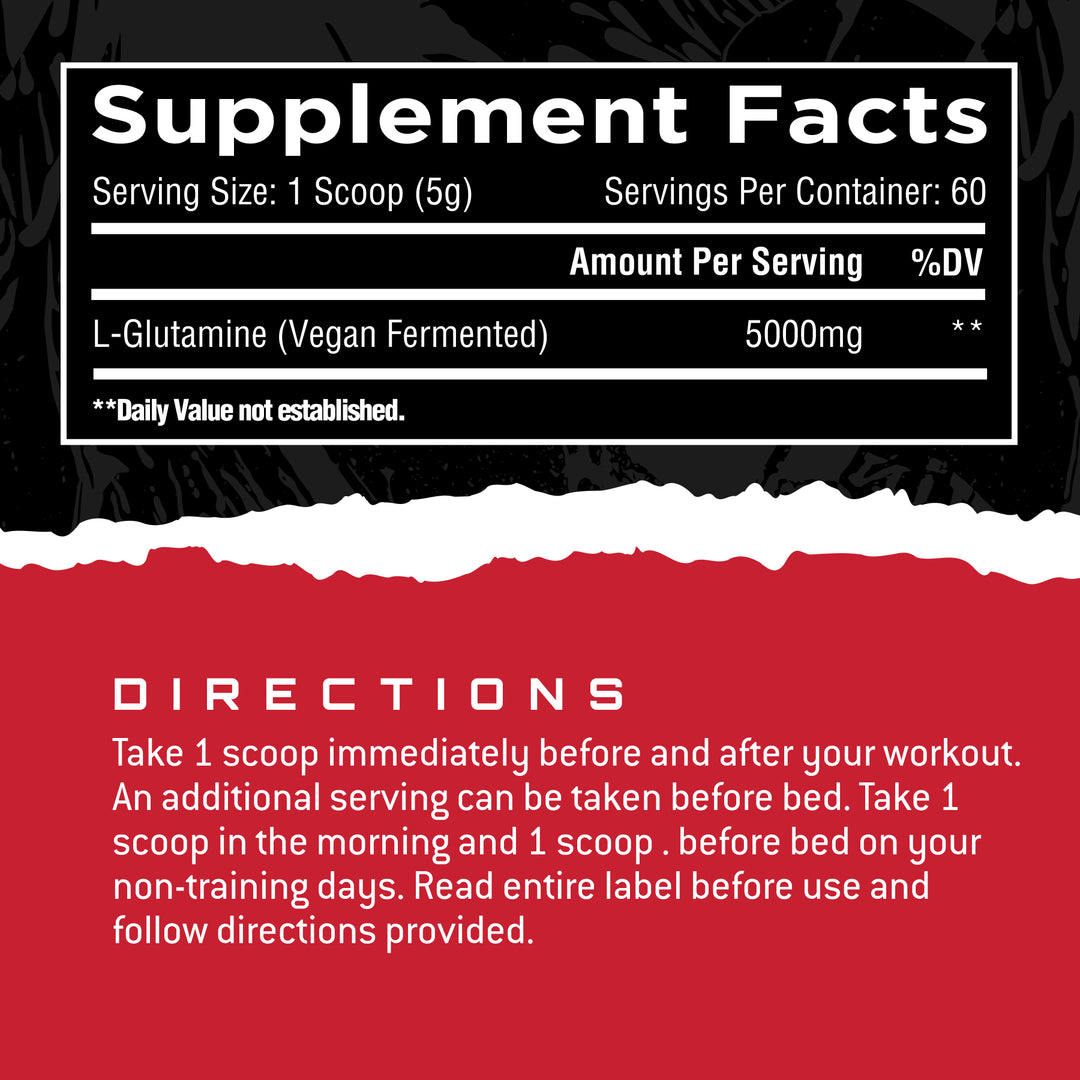
L-Glutamine
Glutamine is one of the body’s most abundant amino acids, and is an amino acid known as, “conditionally essential.” This means that while the body can produce it under normal physiological conditions, it may require additional dietary sources under certain conditions such as athletic training or stress. In these conditions, glutamine plays a critical role in the metabolism of muscular protein, in the volumization of cells, and the reduction of cell catabolism (particularly in stressful or traumatic situations). Glutamine has additionally been demonstrated to be immunoprotective in stressful situations, meaning that supplementation with glutamine may help to maintain immune system function.
Prior to discussing the physiological effects of glutamine – and more specifically, whether it poses any tangible benefits to the proliferation of skeletal muscle tissue – we need to discuss its place in supplementation, in general. Glutamine is perhaps the most lamented of all the amino acids, regularly denigrated to the point that it’s a joke to many athletes. This is largely a problem of perception: glutamine is not, specifically speaking, an anabolic amino acid, and therefore is of little use as it pertains to, “building tissue.” But, “building tissue” is not the only purpose a supplement may have, and the corollary, preserving tissue (or anti-catabolism) is arguably as important. It is in this capacity that glutamine shines, and for this reason it is included in this formula.
Literature in this context is encouraging. Various studies demonstrate that glutamine supplementation may suppress or inhibit the action of enzymes known as proteases, responsible for the hydrolytic breakdown of protein and amino acids into smaller compounds. These studies show both site-specific and whole-body reductions in this process known as, “proteolysis” in the later stages of skeletal muscle recovery. While encouraging, these data are perhaps not as promising as glutamine’s more indirect effects on the catabolic process – namely its effect on glucose metabolism. In both in vitro and in vivo trials, glutamine has shown the ability to promote the synthesis and storage of glycogen (glycogenesis), both in concert with an independent of carbohydrate ingestion.
These effects are most pronounced in physiologic situations where carbohydrate metabolism reliant on insulin signaling are compromised – such as the chronic caloric deficits present in a dieting situation. In this context, glutamine may function as a critical addition, potentiating the body’s glycogen synthesis and storage response; maximizing the limited amount of carbohydrates a dieter may be ingesting.